

If you work in a laboratory that deals with dangerous vapors or chemicals, you likely do a large portion of your work inside a fume hood. Fume hoods are vital for laboratory safety, and their longevity directly impacts operational efficiency and cost-effectiveness.
So how long does a fume hood last? Most have a practical lifespan of 15 to 20 years. Whether yours makes it that long comes down to five things: how well it’s maintained, where it sits in the lab, how the baffles are set, whether the liner can handle your chemicals, and how people use it every day.

1. Maintenance and Annual Testing
Maintenance is a necessary part of owning any laboratory equipment. Proper maintenance will keep your fume hood in good working condition for as long as possible. To ensure that your fume hood continues to function properly, it must be tested upon installation and at least once a year. Most labs do that testing with the ASHRAE 110 test. It measures how fast air moves into the opening (face velocity), uses smoke to show where the air goes, and checks whether the hood actually keeps fumes inside. Here’s more on fume hood testing and certification. Furthermore, the installation, operation, and maintenance of fume hoods are guided by a variety of governmental and industry organizations. Each organization publishes its own standards regarding proper use and inspection guidelines. Regular upkeep also catches the parts that wear out first, like exhaust fan belts and bearings, sash seals, and the liner, before a small fix turns into a big repair.
In addition to the required maintenance, it is recommended to perform daily checks of the fume hood. This includes checking the fume hood for visible airflow blockage such as large items near the slot opening. Other daily checks include glancing at the airflow monitor or alarm (if your hood has one), holding a tissue at the opening to make sure air is pulling inward, and regular cleaning of the hood.
2. Placement in the Lab
Can foot traffic or opening doors affect a fume hood? Yes. People walking past and doors swinging open create air currents that can pull fumes right out of the hood. That’s why placement matters so much for both safety and lifespan. Always avoid placing fume hoods near doorways or exits. Placing a fume hood in a high-traffic walkway could result in bursts of air currents. This abrupt airflow may affect the ability of the hood to capture and exhaust vapors, fumes, and other contaminants. In addition, you should also avoid placing fume hoods near windows or air diffusers. As with foot traffic, these areas result in irregular air currents that may affect the performance of the hood and ultimately, its longevity. To ensure your lab and the equipment within it is optimized, it is important to have a well-designed work area.
3. Baffle Settings
Baffles are adjustable partitions that create slotted openings. The baffles are located along the back of the hood and direct the air that is being exhausted out of the hood. The baffles work with the front sash to control airflow and optimize the efficiency of your fume hood. If the baffles are ever closed or blocked, the exhaust path is also blocked. Set them based on what you’re working with. Light vapors that rise, like those from heated solvents, need the top slot open. Heavy vapors, like chloroform, sink toward the work surface, so they need more airflow at the bottom slot. If you are unsure how to properly adjust them, consult with a laboratory engineer to ensure that the fume hood baffles are set correctly and that the fume hood is functioning properly. Set correctly, baffles keep the hood working the way it was designed to, and that plays a big part in how long it lasts.
4. Chemical Compatibility
The liner is the inside surface of the hood, and it takes the hit from every chemical you work with. If the liner isn’t rated for your chemicals, it wears out early. Acids can eat through an epoxy-coated steel liner, for example, and stainless steel isn’t a good match for strong acids either. Once a liner corrodes, you’re looking at contamination risk, repairs, or an early replacement.
Before you buy, list the chemicals and heat levels your lab works with every day and match the liner to them. Our guide to choosing the right fume hood liner material compares the common options.
5. Daily Work Practices
Having proper work practices and procedures in place will not only affect the longevity of your fume hood but the entirety of your lab. Common mistakes when using a fume hood can be detrimental. Some things to keep in mind specifically when using a fume hood are:
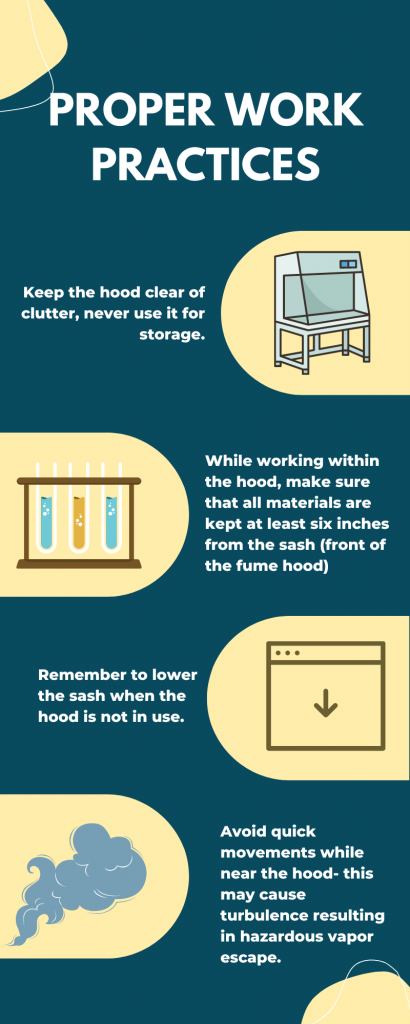
- Keep the hood clear of clutter and never use it for storage.
- Keep all materials at least six inches behind the sash, inside the hood. Lower the sash when the hood isn’t in use.
- Avoid quick movements in front of the hood. They cause turbulence that can pull vapors out.
Your employer has to provide a safe workplace, but everyone in the lab plays a part by following the proper rules and practices.
For further reading regarding proper work practices and proper fume hood use, Princeton University provides an excellent guide that outlines some of the most common misuses of fume hoods. Avoiding these mistakes goes a long way toward extending your fume hood’s life.

Signs It’s Time to Replace Your Fume Hood
Even a well-cared-for hood eventually reaches the end of the road. Watch for these signs:
- It fails its annual face velocity or safety test.
- The sash stays fogged, or the inside is stained or discolored from chemicals.
- The blower motor grinds or rattles.
- Your lab has grown or changed, and the hood no longer fits the work.
If you’re seeing any of these, read our 4 signs it’s time to upgrade your fume hood, or browse fume hoods for sale from National Laboratory Sales.
Fume Hood Lifespan FAQs
How long does a fume hood last?
Most fume hoods have a practical lifespan of 15 to 20 years. Annual testing, good placement, the right liner, and careful daily use help a hood reach the top of that range.
Can traffic in front of a fume hood or opening doors affect its performance?
Yes. People walking past the hood and doors opening nearby create air currents that can pull fumes out of the hood. Place hoods away from doors, walkways, windows, and air vents.
Which fume hood parts wear out first?
The exhaust fan parts (belts, bearings, and pulleys), the blower motor, the sash seals, and the liner, especially if the liner isn’t rated for the chemicals you use. Here are the most common problems with fume hoods and what causes them.
National Lab Sales is an Illinois-based company with over two decades of experience. Our mission is simple – we are dedicated to providing our clients with personalized service and innovative design solutions using premiere products. Whether you’re building a new lab or upgrading your existing one, you’ll find a remarkable selection of casework, workstations, fume hoods, and related lab products at National Laboratory Sales. Most of our items can be shipped quickly – in most cases less than two weeks. Contact us today.