

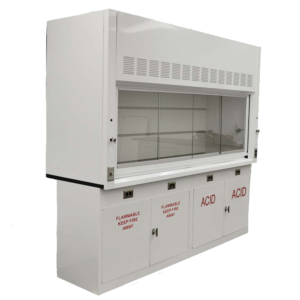
If you work in a laboratory, your fume hood is one of the most important pieces of safety equipment you rely on every day. It stands between you and the toxic, flammable, or explosive chemicals you handle — but only if it’s properly maintained.
A neglected fume hood is a silent hazard. Unlike a broken centrifuge or a malfunctioning autoclave, a fume hood that’s out of spec can look perfectly fine while failing to protect you. That’s why routine fume hood maintenance isn’t just a best practice; it’s a regulatory requirement.
How to Keep Your Fume Hood Safe and Compliant
Daily Fume Hood Operating Standards Every Lab Worker Should Follow
When using a fume hood, you should always check to be sure that it has been inspected within the last 12 months. We have more details on how often to inspect your fume hood. Evaluate the hood before each use to ensure that it is operating at the correct face velocity.
It’s also imperative that you practice safety precautions while working within a fume hood.
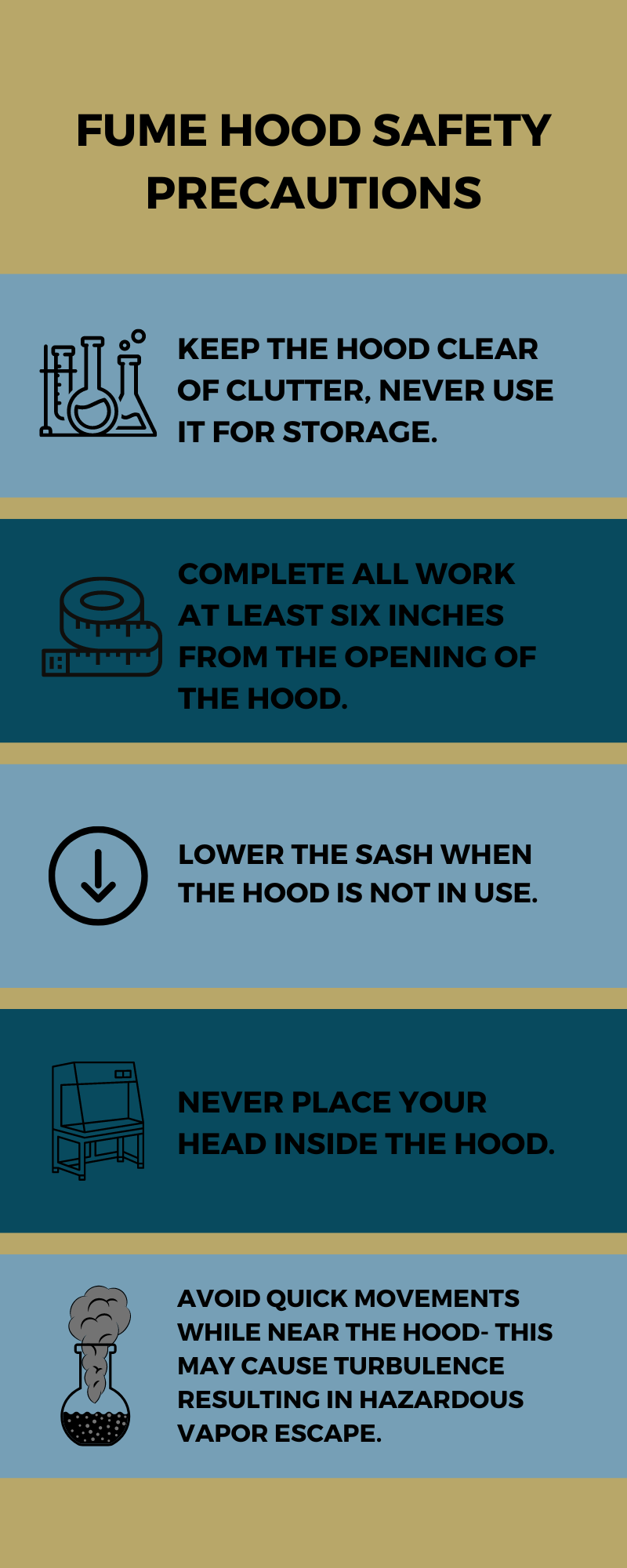
- Keep the hood clear of clutter; never use it for storage.
- Complete all work at least six inches from the opening of the hood.
- Lower the sash when the hood is not in use.
- Never place your head inside the hood.
- Avoid quick movements while near the hood- this may cause turbulence, resulting in hazardous vapor escape.
Fume Hood Certification Requirements: ASHRAE 110 Testing Explained
To ensure that your fume hood continues to function properly, it must be tested upon installation and at least once a year. To obtain a certification, the fume hood must meet certain requirements.
ASHRAE (American Society of Heating, Refrigerating and Air Conditioning Engineers) has defined three methods for evaluating fume hoods:

1. As Manufactured (AM): Requires the manufacturer to test the fume hood in their facility and provide the test data with the hood.
2. As Installed (AI): The most common mode used for testing fume hoods. It is done after the unit is installed and before it is used to verify that it is operating properly and safely.
3. As Used (AU). A dynamic test was performed in an actively occupied lab. This test is usually used as a diagnostic test to assess the nature or source of a problem.
The ANSI/ASHRAE 110 test is a method of testing the performance of laboratory fume hoods. The three test procedures incorporated into the ASHRAE 110 test are the Face Velocity Grid Test, Flow Visualization or Smoke Test, and Tracer Gas Containment Test. Tracer gas containment tests are especially important, as studies have shown that face velocity is not a good predictor of fume hood leakage.
For the hood to pass, the following conditions must be met:
- The average face velocity with the sash at an opening of 18 inches must be a minimum of 100 fpm.
- The average face velocity with the sash at an opening of six inches cannot be greater than 300 fpm.
- Smoke cannot come out of the hood.
Fume Hood Airflow Monitors: How They Work and Which Type You Need
Airflow monitors are the best way to tell if your fume hood is operating in compliance with ASHRAE 110 and other regulations. They directly measure the velocity of the air coming into a fume hood, ensuring that the hood has adequate containment and ventilation. Most fume hoods are equipped with monitors that will sound an alarm when the airflow drops to approximately 80% of the design velocity.
Although you are required to have an airflow monitor on your fume hood, not all hoods come with monitors. This is because many different types of monitors serve different purposes. There are two major types of airflow monitors; analog and digital.
CAV vs. VAV Systems: Choosing the Right Airflow Monitor for Your Fume Hood
Whether your fume hood operates on a constant air volume (CAV) or variable air volume (VAV) system will determine which type of monitor you can get.

If the hood is installed on a CAV system, you can use either a digital or an analog airflow monitor provided by the hood manufacturer.
If the hood is installed on a VAV system, the airflow monitor must come from the VAV supplier so that it can be properly calibrated. A CAV monitor from a hood manufacturer will not work on a VAV system because when the sash is lowered, the face velocity will increase.
Need a Replacement Fume Hood?
If your fume hood is showing signs of wear, failing inspections, or simply no longer meeting your lab’s needs, don’t wait. A fume hood that isn’t performing puts everyone in your lab at risk.
National Laboratory Sales stocks a wide range of certified laboratory fume hoods ready to ship. Get in touch with our team today and we’ll help you find the right fit for your space and budget.
Shop Fume Hoods | Contact Us | (815) 670-6400
Fume hoods should be inspected before each use by the operator, and formally certified by a qualified technician at least once a year. New hoods must also be tested upon installation before use. If your hood triggers airflow alarms frequently or fails a visual smoke test, it should be inspected immediately, regardless of when it was last certified.
If your fume hood fails the ASHRAE 110 test, it should be taken out of service immediately until the issue is resolved. Common causes of failure include ductwork problems, a malfunctioning airflow monitor, or physical damage to the hood.
The correct face velocity for a laboratory fume hood is generally between 80 and 120 feet per minute (fpm), with 100 fpm being the most widely accepted standard. Per ASHRAE 110, the average face velocity with the sash open 18 inches must be a minimum of 100 fpm, and must not exceed 300 fpm with the sash open 6 inches. Face velocity that is too low fails to contain fumes; too high can cause turbulence that pulls contaminants out of the hood.