

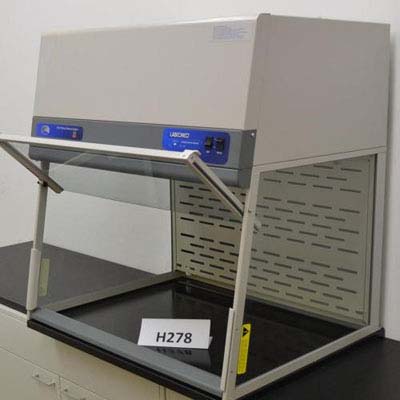
 Fume hoods are essential to modern laboratories, protecting scientists from hazardous vapors, chemical fumes, and airborne contaminants. But these systems didn’t appear overnight. Their design emerged gradually through centuries of experimentation in ventilation and safety. This guide traces the timeline of fume hood invention, the earliest recorded designs, and the major milestones that shaped the equipment used in laboratories today.
Early Attempts at Laboratory Ventilation (1700s–1800s)
The roots of fume hood technology go back long before mechanical ventilation existed. As early scientists conducted experiments with heat, smoke, and chemicals, they needed ways to direct dangerous fumes away from work areas.
One notable example is linked to Thomas Jefferson, who designed an enclosed hearth at the University of Virginia. His structure used an elevated smoke chamber to pull exhaust upward, an early attempt at controlling laboratory fumes. While rudimentary, it reflected the origins of the first fume hood by addressing a universal challenge: safely managing contaminated air during experiments.
These innovations set the foundation for later, more intentional laboratory exhaust systems.
When Were Fume Hoods Invented? (1900–1930s)
The first structure widely recognized as a true fume hood appeared in 1923 at the University of Leeds. This model introduced a rising sash mechanism—a defining feature that resembles the front-opening sash found on most modern hoods.
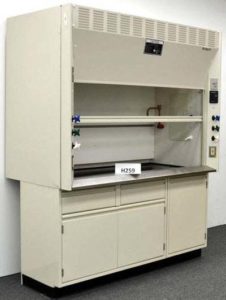
Soon after, new manufacturers began formalizing ventilation equipment for commercial use. Labconco, founded in 1925, contributed early designs that improved airflow consistency and user protection. These efforts brought the laboratory community into the era where fume hood invention became a dedicated engineering field rather than improvised ventilation.
The combination of sash controls, enclosed workspace, and exhaust routing made these early hoods the first examples that resemble today’s systems.
Advancements in Fume Hood Engineering (1940s–1970s)
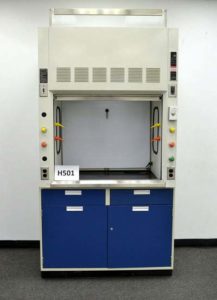
By the 1940s and 1950s, laboratories were expanding, and safety demands increased. Engineers developed more durable exhaust components, including the work of John Weber Jr., whose designs helped stabilize airflow and improve reliability during use.
In the following decades, manufacturers introduced new materials that dramatically changed hood durability and chemical resistance. Labconco’s molded fiberglass fume hood, released in the 1950s, became a pivotal innovation due to its long service life and ability to withstand harsh chemicals.
In the 1960s and 1970s, safety sashes and improved sash controls emerged, helping laboratories manage exposure more effectively. The equipment began transitioning from wooden or metal construction to sturdier, corrosion-resistant designs.
These milestones solidified the historical development of fume hoods, transforming them into specialized tools rather than general ventilation enclosures.
Standardization and Safety Improvements (1970s–1990s)
As adoption increased, the laboratory industry recognized the need for uniform testing standards. This gave rise to guidelines such as ANSI Z9.5 and Z9.7, which outlined:
-
Proper face velocity measurements
-
Containment testing protocols
-
User safety and airflow requirements
These standards helped differentiate a high-performing fume hood from one that merely offered basic ventilation. Manufacturers began designing hoods that complied with strict airflow testing, introducing systems that consistently protected users under a wide range of working conditions.
This era marked an important shift from general ventilation theory to quantifiable performance expectations, further shaping the evolution of laboratory exhaust equipment.
Modern Innovations and Energy Efficiency (2000s–Today)
With rising energy costs and growing environmental standards, the 2000s brought a new wave of technological breakthroughs. Low-flow fume hoods were introduced to maintain containment at lower airflow rates, dramatically reducing operating expenses while improving sustainability.
Today’s fume hoods often feature:
-
Variable Air Volume (VAV) controls for real-time airflow adjustments
-
Digital airflow monitoring systems that track and display safe operating conditions
-
Advanced materials that resist corrosion and withstand intense chemical use
-
Ergonomic sash designs for smoother and safer operations
-
Enhanced containment technologies engineered to reduce turbulence and improve user protection
These developments continue the long progression of fume hood safety features, ensuring scientists work in controlled, reliable environments that minimize exposure and maximize efficiency.
Fume Hoods Today: Performance, Safety, and Versatility
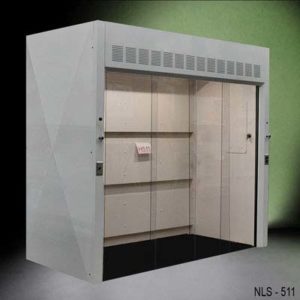
Modern laboratories rely on high-performance fume hoods that offer a balance of protection, energy savings, and ease of use. Many facilities now choose units specifically engineered for specialized applications, such as perchloric acid work, radioisotope handling, or high-temperature processes.
Suppliers like National Laboratory Sales support research facilities, universities, and industrial labs by offering a large selection of new and used fume hoods, plus guidance on selecting systems suited to specific workflows. Whether a lab needs a compact benchtop hood or a full-size floor-mounted model, today’s market provides a vast range of options that surpass anything available in earlier decades.
A Century of Invention and Continuous Improvement
The invention of the fume hood was not a single moment but a gradual progression of ideas, from Jefferson’s enclosed hearth to Leeds’ 1923 sash hood and onward through decades of engineering improvements. Each era added safety enhancements, new materials, and better airflow science, ultimately shaping the high-performance ventilation systems that laboratories depend on today.
Understanding when fume hoods were invented and how they continued to evolve helps today’s laboratory professionals make informed decisions about selecting equipment that meets their needs for safety, reliability, and efficiency.
If your facility is evaluating a new or replacement fume hood, our team at National Laboratory Sales can help you compare options and identify the best solution for your work environment.