

Most laboratory fume hoods should be inspected at installation, after any modification, and at least once per year. Daily visual checks by laboratory staff are also recommended to help identify airflow or safety issues between formal inspections. Following a consistent inspection schedule protects lab personnel, supports regulatory compliance, and ensures reliable hood performance.
What Counts as a Fume Hood Inspection?
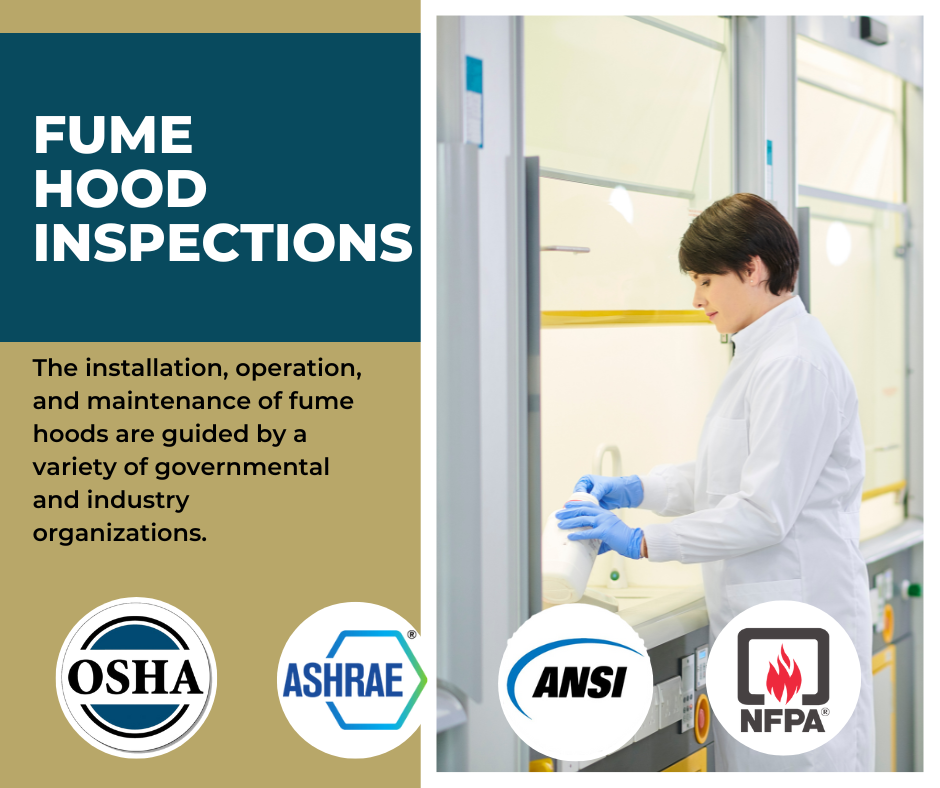
A fume hood inspection is a formal evaluation of whether the hood is operating safely and as designed. This typically includes measuring face velocity, verifying airflow direction, confirming containment performance, and checking the operation of alarms, sashes, and airflow monitors.
Professional inspections are not the same as casual visual checks. While daily user observations are helpful, they do not replace documented performance testing conducted by qualified personnel.
Recommended Fume Hood Inspection Frequency
The generally accepted inspection schedule for laboratory fume hoods includes:
-
At installation, confirm proper setup and performance
-
After modification or repair to ensure that changes have not affected airflow or containment
-
At least annually as part of routine laboratory safety and compliance programs
Some laboratories may require more frequent inspections depending on hood usage, chemical hazards, or ventilation system complexity.
Regulatory Guidelines That Influence Inspection Schedules
Multiple organizations publish guidance that affects how often fume hoods should be inspected. Each focuses on a different aspect of laboratory safety and ventilation performance.
OSHA Fume Hood Inspection Guidelines
The Occupational Safety and Health Administration (OSHA) requires employers to maintain safe working conditions, including effective laboratory ventilation. OSHA guidance emphasizes that fume hoods must provide adequate airflow, proper exhaust, and reliable containment to protect workers from hazardous vapors and gases.
While OSHA does not mandate a single inspection interval, it expects regular verification of ventilation performance, especially after installation or system changes.
ASHRAE 110 Fume Hood Testing
ASHRAE Standard 110 establishes widely recognized testing procedures for laboratory fume hoods. These tests evaluate:
-
Average face velocity
-
Airflow uniformity
-
Smoke visualization
-
Tracer gas containment
ASHRAE 110 testing is commonly performed during commissioning and as part of annual fume hood inspection programs to verify ongoing performance.
ANSI, ASSE, and NFPA Requirements
Additional standards published by ANSI, ASSE, and the National Fire Protection Association (NFPA) address laboratory ventilation, hood monitoring, and fire protection. These standards generally recommend:
-
Routine performance testing at least once per year
-
Re-inspection after significant changes to the hood or exhaust system
-
Documentation of inspection results for safety and compliance records
Together, these standards form the basis of a typical fume hood certification schedule used by many laboratories.
Annual vs. Daily Fume Hood Inspections
Fume hood inspections fall into two distinct categories: daily user checks and formal annual testing.
Daily Fume Hood Inspections
Daily inspections are informal checks performed by laboratory personnel before use. A basic daily fume hood inspection checklist may include:
- Confirming airflow indicators or monitors are within normal range
- Checking for visible airflow obstructions inside the hood
- Ensuring the sash moves smoothly and is positioned correctly
- Verifying the hood interior is clean and uncluttered
These checks help identify obvious issues early but do not measure actual containment or airflow performance.
Annual Fume Hood Inspections
Annual inspections are formal evaluations conducted by trained professionals. These inspections typically include:
-
Face velocity testing
-
Airflow visualization or tracer gas testing
-
Verification of alarms and monitoring devices
-
Confirmation that the hood meets applicable safety standards
Annual testing provides documented proof that a hood meets laboratory fume hood safety standards.
Related: Fume Hood Testing & Certification
Why Inspection Frequency Matters for Lab Safety
Fume hoods are a primary control for exposure to hazardous chemicals. If inspections are skipped or delayed, reduced airflow or containment failures may go unnoticed. This can increase the risk of chemical exposure, regulatory violations, and operational downtime.
Consistent inspection frequency ensures that problems are identified early and corrected before they compromise safety or compliance.
How to Set and Maintain a Reliable Fume Hood Inspection Schedule
Maintaining a clear fume hood inspection schedule is a foundational part of laboratory safety management. Most laboratories follow a straightforward approach:
-
Daily visual checks by users
-
Annual professional performance testing
-
Immediate re-inspection after any modification or system change
If a fume hood fails inspection or can no longer meet safety requirements, replacement may be necessary to protect personnel and maintain compliance.
If you find that your fume hood is faulty and you need it replaced, please contact us at (815) 670-6400.