

Fume hoods are an indispensable piece of equipment for the safety and integrity of laboratories. This safety device allows lab personnel the ability to conduct hazardous work in an enclosed space while 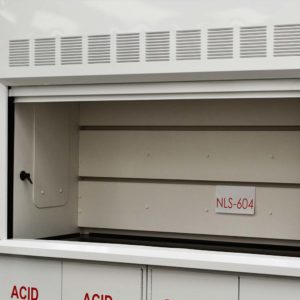 protecting against explosions, spills, and the inhalation of harmful vapors.
As air is moved from the fume hood through the ductwork, there are many factors that determine how harmful fumes are removed from the working area. Fume hood baffles are the primary mechanism for fume hood airflow control, directing exhaust patterns to capture and remove hazardous vapors before they can escape into the lab environment.
Whether you are a laboratory safety officer setting up a new hood, a researcher troubleshooting poor containment, or a facility manager conducting a compliance review, understanding how fume hood baffles work is foundational to maintaining a safe and efficient laboratory environment.
What is a fume hood baffle and what does it do?
Fume hood baffles are movable partitions along the interior back wall of the hood that create adjustable slotted openings to direct exhausted air and distribute airflow evenly across the work surface.
Visible from the operating area, they work together with the front sash and, in variable air volume (VAV) systems, the VAV controller to maintain consistent face velocity and optimize containment.
When properly adjusted, baffles help eliminate dead zones and reverse airflow near the sash opening, reducing the risk that vapors will accumulate or escape toward the user. Because they are part of the exhaust path, closed or obstructed baffles can block airflow entirely, making them a leading cause of containment failure and potential laboratory exposure incidents.
How to adjust fume hood baffles for different chemicals and applications
Adjusting the baffles will allow the user to have a well-ventilated work surface. This also ensures that there is no turbulence from airflow disruptions. The adjustment process is not always simple and takes time to perfect. Someone familiar with the fume hood, its capabilities, and settings will be able to adjust the baffles with more ease than someone who is less familiar.
Proper fume hood baffle adjustment depends on exhaust volume, fume hood sash settings, and the specific chemicals or processes being conducted; these variables interact to determine the ideal slot configuration.
Adjusting baffles for light vs. dense vapors: top slot vs. bottom slot settings
Often, baffles are adjusted based on the materials being vented. In particular, whether or not those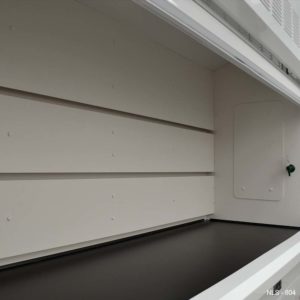 materials are lighter or heavier than air. For example, when working with light vapors (e.g., such as those from acetone, methanol, or heated solvents) that rise naturally, maximum fume hood face velocity is needed at the top slot, ensuring low-density gases are captured before they can migrate toward the sash opening. And the top slot should be fully open to ventilate the vapors out of the hood.
When dense or heavy vapors are present (e.g., those from chloroform, dichloromethane, or carbon tetrachloride), maximum airflow is required at the bottom near the work surface. And in this case, the top slot would be closed, and the center and bottom slots are set to open.
When to consult a laboratory engineer about fume hood baffle settings
In instances where the work done inside a fume hood is replicated on a daily basis with little to no variation, baffles may be set and never adjusted. In these cases, it is highly recommended to consult with a laboratory engineer to ensure that the fume hood baffles are set correctly, allowing the fume hood to function properly.
Fume hood baffles play a central role in laboratory exhaust ventilation system performance. Familiarity with the fume hood, its capabilities, and the proper adjustment of the baffles will ensure optimal performance of the fume hood and protection for laboratory personnel.