

Working in a laboratory requires strict adherence to laboratory safety rules. Skipping proper lab etiquette puts both you and your colleagues at serious risk.
Labs are productive spaces for discovery, education, development, and collaboration. Employers are legally obligated to establish lab safety best practices, but each employee shares equal responsibility for following proper lab conduct every day.
Prepare Before Every Lab Session
Before starting any experiment, review your laboratory standard operating procedures to understand the materials involved, their hazard classifications, and the correct handling protocols.
Every lab worker should know how to locate and operate emergency equipment — this is a non-negotiable part of laboratory PPE requirements and emergency preparedness training.
Follow Your Lab’s Standard Operating Procedures (SOPs)
Labs must have a list of standard operating procedures (SOPs) when work involves the use of hazardous materials or physical hazards. A Standard Operating Procedure (SOP) is a documented, step-by-step protocol that specifies how to safely execute a lab process — including required PPE, chemical quantities, waste disposal steps, and emergency procedures — ensuring consistency and regulatory compliance.
Following your lab’s established procedures is the single most effective way to prevent lab accidents caused by human error, improper handling, or equipment misuse.
- Wear chemical-resistant gloves and ANSI-rated safety goggles whenever handling hazardous reagents
- Follow all SDS instructions and lab-specific SOPs for each procedure
- Never leave open flames, active heating mantles, or reactions unattended
- Store and handle flammable materials away from all ignition sources, including hot plates and open burners
Practicing proper fume hood safety guidelines means limiting hood contents to only the minimum quantity of chemicals required, as excess materials create unnecessary exposure risks.
Keep the Lab Clean to Prevent Contamination
After completing a procedure, decontaminate your work surface using an appropriate cleaning agent for the chemicals used. Leaving reagent residue on benchtops can cause cross-contamination in subsequent experiments and expose other lab workers to hazardous materials.
Consideration for others is a must when it comes to lab etiquette.
Laboratory cleanliness and contamination prevention depend on the proper use of every piece of equipment. Neglecting either can compromise experiments and endanger personnel. Regular cleaning and maintenance of your fume hood will help to keep it at optimal performance levels.
Use Designated Chemical Storage Areas
Chemical storage in the lab must follow regulatory standards. Flammable liquids belong in a certified flammable storage cabinet, never in a fume hood or open shelving.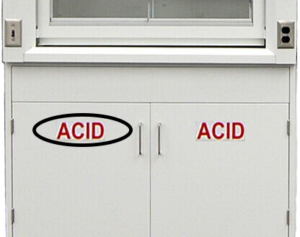
Fume hoods are only designed to be used as a safety device when working with hazardous materials, not as a storage unit. Storing items inside a fume hood raises the physical sash blockage level, reducing the face velocity of air flowing into the hood. When face velocity drops below the minimum threshold (typically 80–100 FPM), the hood can no longer contain hazardous vapors, allowing them to escape into the lab breathing zone.
Although a fume hood works to exhaust hazardous fumes out of the laboratory, it should only be used as necessary. Do not leave uncapped bottles in the hood. Leaving open materials in the hood will require the fume hood to work constantly. Keeping unnecessary items out of the hood will reduce the number of fumes exhausted from the laboratory, reducing the risk of harm to personnel and being better for the environment.
It’s best for the environment to turn the hood off when it isn’t in use. If you store materials in the hood, you can’t turn it off, or the toxins inside will be released into the laboratory.
Safely Dispose of Laboratory Waste
Hazardous waste disposal in laboratories is not one-size-fits-all: the correct container depends on the waste type:
- sharps containers for needles
- regulated medical waste boxes for biohazards
- certified chemical waste bins for solvents
Chemical waste is regulated by the Environmental Protection Agency (EPA) through the Resource Conservation and Recovery Act (RCRA). It must be disposed of through the Hazardous Waste Disposal Program.
A critical fume hood safety guideline that is frequently violated: fume hoods are not waste disposal systems and should never be treated as one, even for liquid solvents. Many fume hoods are outfitted with condensers, traps, or scrubbers to contain or collect waste solvents, toxic vapors, or dust in the event of a spill. However, these mechanisms are only meant to be used for small amounts of materials at a time.
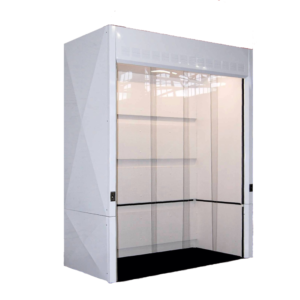
Proper fume hood use is central to lab safety and etiquette. If your current hood is aging, undersized, or failing to meet your containment needs, browse our selection of over 200 certified laboratory fume hoods.
Laboratory etiquette refers to the professional conduct, safety habits, and shared-space norms that every person working in a lab is expected to follow. It covers both formal requirements — such as wearing PPE, following standard operating procedures (SOPs), and disposing of waste correctly — and informal expectations, like labeling your samples, cleaning up your workspace, and communicating clearly when an incident or error occurs.
Proper lab etiquette matters for three reasons: it protects your personal safety, prevents contamination or damage to other people’s work, and ensures your lab remains in compliance with OSHA and EPA regulations. A single lapse — like leaving an uncapped chemical in a fume hood or storing flammables on an open shelf — can cause harm to colleagues, compromise experiments, or result in regulatory penalties.
No — fume hoods should never be used for chemical storage. A fume hood is a safety device designed to exhaust hazardous vapors away from the breathing zone while you are actively working. It is not a storage cabinet.
Proper lab cleanup after a procedure involves more than wiping down a bench. To clean up correctly:
Decontaminate your work surface using an agent appropriate to the chemicals used.
Cap, label, and return all reagents to their designated storage locations. Never leave open containers on the bench or inside the fume hood
Label all samples and materials you are storing with your name, date, contents, and any relevant hazard information.
Dispose of waste properly using the correct container for each waste stream.
Clean shared equipment — glassware, instruments, and fume hood sashes — before leaving so the next user begins with a clean setup.