

Selecting the proper fume hood liner is one of the most important decisions you’ll make when outfitting a laboratory. The liner, also known as the interior surface of the hood, protects the enclosure from chemicals, heat, moisture, and daily wear. Choosing the right material ensures long-term performance, safer operation, and a more durable investment.
The right choice supports safety, simplifies maintenance, and extends the life of your equipment. The wrong one can lead to corrosion, contamination, and premature replacement.
What Is a Fume Hood Liner and Why Does It Matter?
A fume hood liner is the protective interior surface that shields the hood structure from corrosive vapors, chemical splashes, high temperatures, and routine cleaning. The liner material plays a crucial role in:
-
Chemical resistance
-
Heat tolerance
-
Compliance with laboratory safety standards
Choosing the wrong material can shorten equipment life, compromise safety, and lead to costly repairs or replacements. Understanding your specific laboratory conditions is essential before selecting a liner.
Key Factors to Consider When Choosing a Fume Hood Liner
Before reviewing individual material options, consider the following:
Chemical Exposure
⇒ Which chemicals will be used regularly—acids, solvents, oxidizers, chlorides, or corrosive fumes?
Heat and Temperature Requirements
⇒ Will the hood support high-heat processes such as digestion, evaporation, or combustion testing?
Cleaning and Maintenance
⇒ Some materials tolerate aggressive cleaning agents better than others.
Budget and Lifespan
⇒ Upfront cost matters, but replacement frequency and downtime matter more. A lower-cost liner may cost more over time if it fails early.
Laboratory Application
⇒ Different environments, from academic settings to industrial production, place different demands on liner materials.
Once these elements are understood, you can more confidently choose the best liner for your application.
Comparing Common Fume Hood Liner Materials
Each liner material has strengths and trade-offs. The best option depends on how your hood is used day to day.
Epoxy Coated Steel 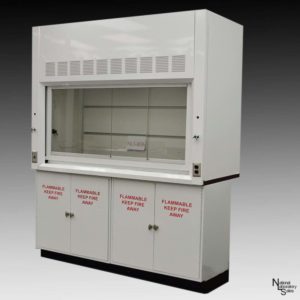
🏆 Best For:
⇒ Basic applications with minimal corrosive chemical exposure.
💪 Strengths:
-
Economical option
-
Smooth, cleanable surface
-
Works well in teaching labs and low-corrosion environments
🚧 Limitations:
-
Not chemical-resistant
-
Acids and harsh reagents can degrade the coating
-
Unsuitable for heavy solvent or acid digestion work
💡 Ideal Laboratory Uses:
⇒ Instructional spaces, general-use labs, and facilities with predictable, low-risk chemical handling
Stainless Steel
⇒ Stainless steel is a strong, durable, and widely used liner choice, especially when heat resistance and longevity are priorities.
🏆 Best For:
⇒ Labs requiring durability, heat stability, and moderate corrosion resistance.
💪 Strengths:
-
Highly durable and impact-resistant
-
Handles elevated temperatures
-
Available in multiple grades for performance flexibility
🚧 Limitations:
-
Not recommended for strong acids or halogen compounds
-
More expensive than epoxy-coated steel
💡Ideal Laboratory Uses:
⇒ Pharmaceutical labs, fabrication environments, general chemistry labs, and testing facilities.
Polyvinylchloride (PVC)
🏆 Best For:
⇒ Low-heat, wet chemistry environments.
💪 Strengths:
-
Good resistance to mild acids, bases, and alcohols
-
Low maintenance and low maintenance
-
Commonly used where splash protection is needed
🚧 Limitations:
-
Poor heat tolerance; not suitable for high-temperature processes
-
Can warp or release fumes if overheated
💡Ideal Laboratory Uses:
⇒ Water treatment labs, instructional labs, and facilities with frequent rinsing or chemical splash exposure.
Fiberglass Reinforced Composite Panel
⇒ A fiberglass composite panel is the most commonly used fume hood liner material due to its strong balance of chemical resistance and affordability.
🏆 Best For:
⇒ Chemistry labs with routine exposure to corrosive substances.
💪 Strengths:
-
Excellent resistance to a broad range of chemicals
-
Low smoke and flame toxicity
-
Moisture and corrosion resistant
-
Structurally strong and long-lasting
🚧 Limitations:
-
Not ideal for very high-heat operations
-
Susceptible to damage from heavy impact
💡Ideal Laboratory Uses:
⇒ General chemistry, industrial manufacturing facilities, biotechnology labs, and research settings requiring versatile chemical resistance.
Molded Fiberglass Reinforced Polyester
🏆 Best For:
⇒ Labs seeking seamless construction for easier cleaning and reduced contamination risk.
💪 Strengths:
-
One-piece molded design eliminates seams
-
Strong resistance to acids, alkalis, and moisture
-
Easy to clean and maintain
🚧 Limitations:
-
Can be costlier than standard fiberglass panels
-
Moderate heat tolerance—high-temperature work may require alternative materials
💡Ideal Laboratory Uses:
⇒ Pharmaceutical research, bioscience environments, and labs with strict sanitation requirements.
Which Fume Hood Liner Is Right for Your Lab?
A quick way to narrow your options:
-
Choose epoxy-coated steel if cost is a priority and chemical exposure is minimal.
-
Choose stainless steel if durability and heat resistance matter more than chemical aggressiveness.
-
Choose PVC if your lab involves wet chemistry and frequent washdowns.
-
Choose fiberglass composite panels if you need broad chemical resistance and long-term performance.
-
Choose molded fiberglass polyester if cleanliness and contamination control are top concerns.
Common Mistakes When Selecting a Fume Hood Liner
Avoid these costly errors:
❌ Selecting a liner without considering the chemical inventory
❌ Overlooking heat exposure from equipment or reactions
❌ Choosing solely based on upfront cost rather than long-term durability
❌ Misjudging maintenance needs or cleaning frequency
❌ Failing to match the liner material to the laboratory’s workflow
Making the right choice upfront prevents premature corrosion, structural degradation, and unsafe working conditions.
Making a Confident, Informed Liner Selection
A fume hood is a significant investment, and choosing the correct liner material ensures it performs reliably for many years. Evaluate your chemical usage, heat requirements, cleaning processes, and budget to determine which material best aligns with your laboratory’s needs.
If you’re uncertain which liner material is best suited for your application, our team is here to help. Call us at 815-670-6400 for expert guidance and product availability.
Your fume hood should support safe, efficient work—and the right liner makes all the difference.