

Purchasing laboratory furniture is a planning decision that affects safety, workflow, compliance, and long-term costs. The right furniture supports daily operations, protects personnel, and adapts as your lab evolves. Before placing an order, it’s essential to evaluate lab type, safety requirements, layout constraints, material durability, budget considerations, and delivery timelines.
Start With Your Laboratory Type and Core Function
The type of laboratory you operate determines nearly every furniture requirement.
Laboratories vary widely in purpose, and furniture must support the specific tasks, equipment, and safety needs of each environment. Identifying how your lab functions on a daily basis is the foundation of any successful laboratory furniture selection.
Common laboratory types include:
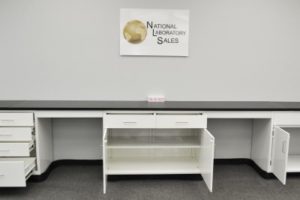 — Analytical & Quality Laboratories
— Animal Laboratories
— Biosafety Laboratories
— Cannabis Laboratories
— Chemical Laboratories
— Cleanrooms Laboratories
— Clinical & Medical Laboratories
— Educational Laboratories
— Electronics Laboratories
— Manufacturing Laboratories
— Production Laboratories
— Radiological Laboratories
— Research & Development Laboratories
— Jewelry Making Laboratories
— Plus many more….
Each of these environments places different demands on work surfaces, storage, ventilation, and utility integration. Clearly defining your lab type helps avoid purchasing furniture that limits performance or requires costly modifications later.
Wet Labs vs. Dry Labs: Furniture Differences That Matter
Wet laboratories handle liquids, chemicals, or biological materials. Furniture in these spaces must support sinks, plumbing, chemical-resistant surfaces, and easy cleaning. Casework and benches should withstand moisture, spills, and repeated exposure to corrosive substances.
Dry laboratories, by contrast, focus on electronics, data analysis, or instrumentation that does not involve liquid handling. Furniture for dry labs prioritizes equipment support, cable management, vibration control, and ergonomic workstation design.
Understanding whether your lab operates as a wet lab, dry lab, or hybrid environment ensures that materials, layouts, and utilities are properly matched to daily use.
Safety and Compliance Requirements
Safety is not optional in laboratory design. Furniture must accommodate protective equipment, ventilation systems, and clear pathways to reduce risk and support compliance. Storage solutions should safely house chemicals, samples, or equipment while minimizing exposure hazards.
Beyond physical safety, furniture placement and design should allow for proper airflow, emergency access, and routine inspections. Planning with safety requirements in mind protects personnel and helps prevent delays during inspections or audits.
When a Fume Hood Is Required
Many laboratories require a fume hood to safely capture and exhaust hazardous vapors, fumes, or particulates. Whether a fume hood is necessary depends on the materials being handled and the processes performed.
If a fume hood is required, it should be considered early in the furniture planning process. Fume hoods affect layout, cabinet placement, duct routing, and overall space utilization.
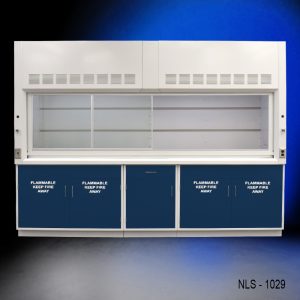
Fume Hood Placement and Space Planning
Fume hood placement has a direct impact on lab efficiency and safety. Placement decisions should account for:
-
Ductwork routing and ceiling clearance
-
Distance from doors, walkways, and air disturbances
-
Proximity to utilities and supporting cabinetry
-
Workflow patterns and personnel traffic
Proper placement allows surrounding furniture to be installed efficiently and reduces the need for redesigns after installation.
Designing for Workflow and Efficiency
Furniture layout should reduce wasted movement and support consistent processes.
Efficient laboratory design is about more than fitting furniture into a room. Work surfaces, storage, and equipment should be positioned to support how tasks are actually performed. Poor layout can slow productivity, increase fatigue, and introduce safety risks.
Thoughtful furniture placement improves efficiency by keeping tools, materials, and equipment within easy reach while maintaining clear circulation paths throughout the lab.
Lead Times, Shipping, and Installation Planning
Laboratory furniture is often a long-term investment and may not be easily replaced once installed. Custom furniture typically requires longer production timelines, while stocked or modular systems can ship more quickly for time-sensitive projects.
When planning your purchase, consider:
-
Manufacturing lead times
-
Shipping schedules
-
Installation coordination
-
Project deadlines
Understanding delivery timelines early helps prevent delays that could affect lab operations or occupancy schedules.
Laboratory furniture from National Laboratory Sales is a little different.
With a massive warehouse, furniture is already produced and ready to be shipped. From purchase to delivery, a custom laboratory cabinet will arrive in a matter of weeks, and a newly purchased fume hood can be shipped within a few days. If time is of the essence, know your options, as the completion of a laboratory could be delayed if the shipping time is not considered.
National Laboratory Sales is the place to start for your laboratory furniture and fume hood needs. For assistance in selecting the right furniture and equipment for your laboratory, call and speak to a lab design consultant today at 815-670-6400.